


Prismatic Protocol
Salon-perfect color. Cleaner, brighter, longer.
You leave the salon with color that looks amazing: clear tone, clean reflection, soft movement, and shine that feels intentional.
Then real life starts touching it.
Water. Heat. Styling and the Environment.
Each one can disturb the finish in small ways until beautiful color starts looking warmer, duller, cloudier, or older than it should.
The Prismatic Protocol is built to help protect that salon finish from the hidden forces that make color shift before its time.
Cleanse removes what interferes. Lock resets and seals. Veil protects the finish.
Color care should not just be gentle. It should help defend the result.
The Prismatic Protocol launches June 1st, 2026. Join the list to be first in line.
Who This Is For
This protocol is for you if:
.png)
Your color fades within days, not weeks
.png)
You’re seeing brassiness or warmth you didn’t ask for
Your tone shifts between salon visits
Your hair looks dull even right after coloring
You’re on a GLP-1 medication and your color just won’t hold the way it used to
You’re tired of paying for color that doesn’t last
For Color That Starts Changing Too Soon
For blondes that turn warm. Brunettes that lose richness. Reds and coppers that fade too quickly. Glosses that look luminous at the salon, then cloudy a week later.
Prismatic is for color-treated hair exposed to the real conditions color lives in after the salon: water, heat, styling, sunlight, residue, and daily wear.
Every color client has exposure. The source changes. The visual effect is often the same: color starts to look less clear, less reflective, less…expensive.
If your color still feels clean but looks hazy, dull, brassy, flat, or tired, this protocol was built for you.
Why Color Starts To Shift
Color does not fade from one cause. It fades when the hair fiber stays reactive.
After color, gloss, toner, or lightener, the cuticle can remain slightly lifted. Hair can also become more porous from lightening, heat styling, dryness, stress, nutrition changes, weight loss, medication changes, or previous chemical work.
That creates more escape points for tone, shine, smoothness, and reflection.
But porosity is only part of the problem.
Water and salon chemistry can leave behind invisible interference. Over time, that interference can scatter light, dull reflection, accelerate oxidation, push tone warmer, and make fresh color look older than it is.
That is why Prismatic treats color fade as a sequence problem.
Remove the interference. Reset the fiber. Lock the finish. Protect the shine.
The Hidden Fade Drivers
Most color-safe products focus on being gentle.
Gentle matters. But gentle alone does not remove the invisible things that can make color unstable.
Water residue, trace metals, salon-process residue, and environmental buildup can all interfere with how color-treated hair looks and feels.
The source changes. The effect is often similar.
Color loses its clean reflection. Tone looks less precise. Shine looks less expensive. Hair can feel conditioned but still look visually tired.
Scientific research has shown that redox metals such as copper and iron can affect oxidative dye chemistry. Other studies have linked copper and iron accumulation in dyed hair with increased oxidative modification, while copper and calcium uptake in colored hair has been associated with reduced shine and poor wet and dry feel.
Read the supporting research:
Redox metals and hair color chemistry
Copper ions and oxidative hair damage
Copper and calcium uptake in colored hair
This is the quiet advantage of Prismatic: it helps clear what blocks the result before sealing and protecting the finish.
Why Your Color Isn’t Holding
Why your color fades faster now
Color retention depends on cuticle integrity. When the outer layer of your hair is smooth, tight, and healthy, color molecules stay locked inside the strand. That’s what gives you weeks of vibrant, consistent tone.
When cuticle integrity is compromised — by damage, by dryness, by nutritional depletion — the cuticle lifts. Color molecules escape. Tone shifts. Shine disappears.
For people experiencing rapid weight loss or on GLP-1 medications, this happens more quickly. Nutritional changes weaken the hair’s protein structure. The cuticle becomes more porous. And color — which was applied to healthier hair — washes out at an accelerated rate.
This isn’t your stylist’s fault. It’s your hair’s current condition.
The Prismatic Protocol addresses this by sealing the cuticle after color service, locking in tone, and providing ongoing protection between visits. Three steps. No guesswork.
Three Steps. One Cleaner Color Finish.

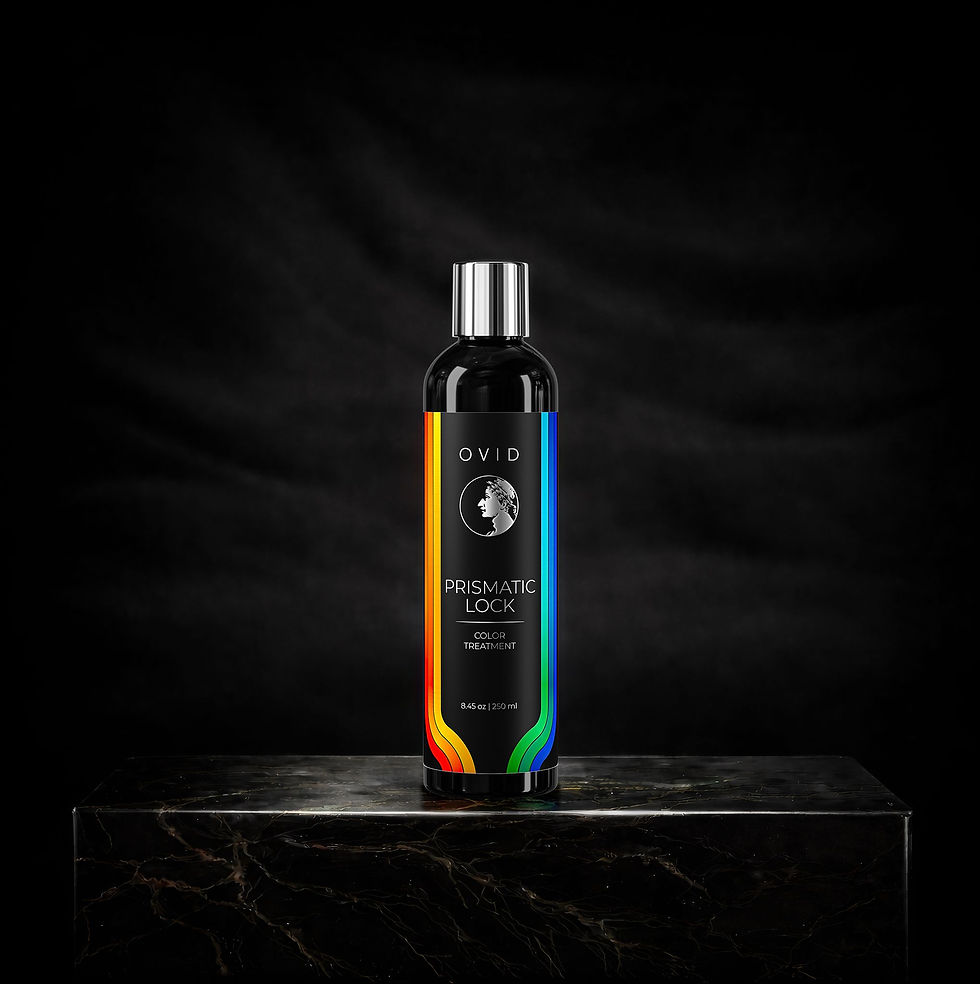

How the Protocol Works
1. Remove interference.
Prismatic Cleanse clears the surface without roughing up the cuticle. It helps remove the residue that can block sealing, scatter light, and keep color looking unstable.
This is the step most color routines skip: preparing the hair before trying to protect it.
2. Reset and lock the fiber.
Prismatic Lock brings the hair back into an acidic state after color, gloss, toner, or lightener. The cuticle tightens. The surface becomes calmer. The finish becomes more predictable.
The goal is not just softness. The goal is a more stable surface for tone, shine, slip, and reflection.
3. Veil the finish.
Prismatic Veil protects the result during the blowout window, where heat, brush tension, humidity, and friction can disturb color clarity and shine.
It helps the hair look polished without making it feel coated, oily, or heavy.
What Makes Prismatic Different
Most color care tries to be gentle. Prismatic goes further.
It starts before the seal. It helps remove hidden interference. It treats color care as chemistry rather than just softness. And it finishes light, so hair still moves and feels like hair.
The result is not artificial gloss sitting on top of the fiber.
It is cleaner reflection, calmer texture, and color that looks closer to what your stylist intended.
The Result
Color that looks closer to the appointment.
Cleaner tone.
Clearer shine.
Smoother feel.
Less visual dullness.
A blowout that protects the finish instead of disturbing it.
A color routine that respects what your stylist created.
FAQ
No. Hard water and well water can be major fade drivers, but they are not the only issue.
City water, softened water, pool water, travel water, salon chemistry, heat styling, and environmental buildup can all affect how color-treated hair looks and feels. Prismatic is built for the broader problem: invisible interference that dulls, warms, roughens, or destabilizes the finish.
Use the full protocol on color days and after chemical services. At home, use Prismatic Cleanse according to your wash rhythm, Prismatic Lock when the hair needs reset and sealing support, and Prismatic Veil on blow-dry days.
The strongest result comes from the full sequence. Cleanse removes interference. Lock resets and seals. Veil protects the finish.
No. It is for any color-treated hair that fades, shifts, dulls, warms, roughens, or loses shine faster than it should.
Blondes may notice brassiness first. Brunettes may notice dullness, warmth, or loss of richness. Reds and coppers may notice fast vibrancy loss.
No. It is for any color-treated hair that fades, shifts, dulls, warms, roughens, or loses shine faster than it should.
Blondes may notice brassiness first. Brunettes may notice dullness, warmth, or loss of richness. Reds and coppers may notice fast vibrancy loss.
Prismatic is designed for clean deposition, not heavy coating. If your hair is fine, apply Prismatic Veil lightly from mids to ends before blow-drying.
No. Prismatic Cleanse helps remove invisible interference and buildup, but the protocol is not a stripping reset. It is designed for color-treated hair, where preparation has to be effective without making the fiber more reactive.
Protect The Investment
A salon color service can cost $150, $250, $300, or more. If your color looks tired in two weeks instead of six, you are either rebooking early or living with a result that no longer looks like what you paid for.
Prismatic helps preserve the part of the service clients actually see every day: tone, shine, smoothness, and clarity.
Build on the Prismatic Protocol
Support the internal foundation for healthier-looking new growth over time. Explore Growth Protocol
Rebuild the structural feel and surface integrity that helps color-treated hair look smoother, stronger, and more reflective. Explore Keratin Protocol
Use smarter heat and styling tools to reduce unnecessary stress on the color you just protected. Explore Style Protocol